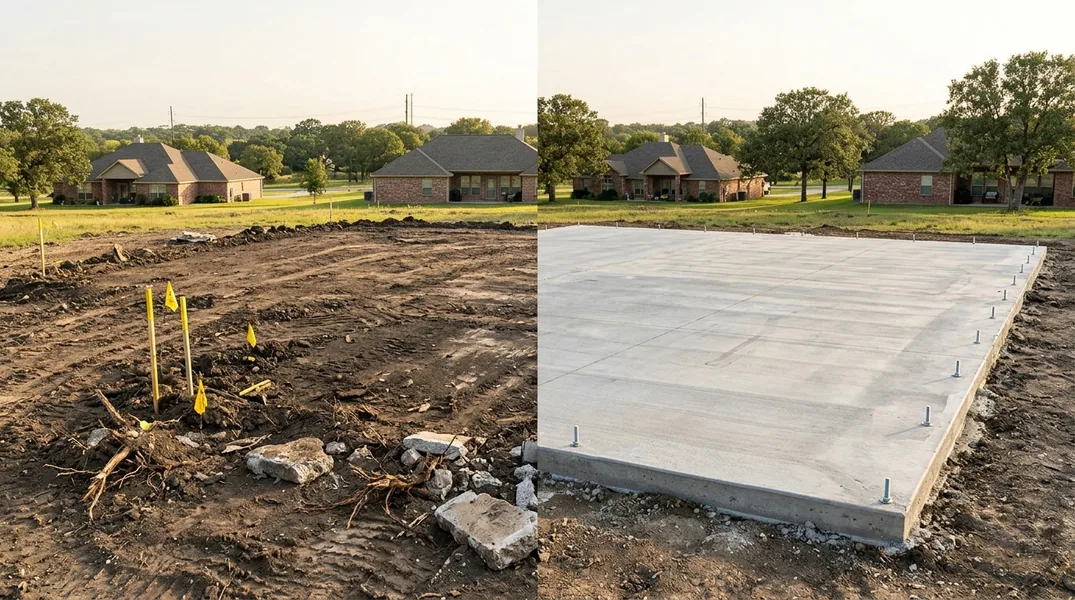
Why New Construction Slab Inspection Matters in College Station
Buying a new home in College Station is exciting, but the foundation literally supports everything you'll build on that property. The concrete slab is the backbone of your home's structural integrity, and unlike a traditional basement or crawl space, it's difficult and expensive to repair once problems develop. Many homebuyers focus on interior finishes and curb appeal while overlooking one of the most critical components: the foundation slab itself.
New construction concrete slabs in College Station face unique challenges due to the region's clay-heavy soil composition. Understanding what to look for before closing protects your investment and saves you from costly repairs down the road. A thorough slab inspection is not just a recommendation; it's essential due diligence that every homebuyer should complete.
Understanding Brazos County Clay Soil and Its Impact on Concrete Slabs
The Brazos County area, where College Station is located, sits on expansive clay soils that present particular challenges for concrete foundations. Clay soil expands when it absorbs moisture and contracts when it dries out. This constant movement can cause concrete slabs to crack, heave, or settle unevenly over time. Builders in the region know these challenges exist, but not all follow best practices to mitigate them.
When a concrete slab is poured directly on clay without proper preparation, the soil beneath can shift seasonally. During wet periods, clay swells and pushes upward against the slab. During dry periods, it shrinks and creates voids underneath. This cyclical movement is one of the primary causes of foundation problems in new homes throughout Brazos County. Understanding this geological reality helps you ask the right questions during your builder slab inspection and know what warning signs to watch for.
Builder Slab Inspection Texas: What to Check Before Closing
Before you close on a new home in Texas, you have the right to conduct a thorough builder slab inspection. This is not the same as a general home inspection; it requires specific attention to the concrete foundation. Start by examining the slab surface for visible cracks, especially diagonal or stair-step patterns, which indicate structural movement. Small hairline cracks may be cosmetic, but wider cracks (typically anything over 1/8 inch) warrant concern and should be documented.
Check for signs of uneven settling by looking at how doors and windows align. If doors stick or windows don't close smoothly, the slab may have shifted. Walk around the perimeter of the home and look for gaps between the foundation and the exterior walls. Inside, inspect the flooring for slopes, dips, or areas where tiles are cracking. Ask your builder for documentation showing that proper soil preparation was completed, including soil testing reports and details about any moisture barriers installed beneath the slab. Request copies of the concrete mix design and any warranties offered on the slab itself.
New Construction Concrete Slab College Station: Key Documentation to Request
Professional builders working on new construction concrete slab projects in College Station should provide comprehensive documentation before closing. This paperwork is your proof that the slab was installed correctly and gives you recourse if problems develop later. Request the soil investigation report, which shows whether the soil was tested for bearing capacity and expansiveness. Ask for the concrete testing results, including strength tests (typically 28-day compressive strength tests) that verify the concrete meets specifications.
You should also obtain the as-built grading plan, which documents how the site was prepared and whether proper drainage was established around the foundation. Ask about the moisture barrier system used beneath the slab and whether it meets current standards. Get the builder's warranty in writing, specifying what structural slab defects are covered and for how long. If the builder resists providing this documentation or seems evasive, that's a red flag. Reputable builders take pride in their foundation work and readily share proof of their quality standards.
Common New Home Slab Clay Soil Problems and Red Flags
Certain problems are more common in new homes built on clay soil in the region. Slab heave occurs when clay swells so much that it pushes the concrete upward, creating a hump in the floor. This is particularly dangerous because it can damage the structural frame of the home. Slab settlement is the opposite problem, where soil compresses and the slab sinks, creating low spots and stressing the walls above. Differential settlement, where one part of the slab settles more than another, often causes diagonal cracks emanating from corners of windows and doors.
Efflorescence, a white chalky residue on the concrete surface, indicates moisture is migrating through the slab. While sometimes cosmetic, it suggests a moisture problem that could eventually damage finishes or create conditions for mold growth. Horizontal cracks running along the perimeter, especially near the foundation stem wall, can indicate heave or pressure from clay expansion. If you notice any of these issues during your pre-closing walkthrough, do not proceed until your builder provides a remediation plan and timeline for repairs. These are not cosmetic issues that will improve over time; they typically worsen.
When to Call a Professional: Concrete Repair and Resurfacing Options
If you discover slab problems after closing, or if you're concerned about the condition of your slab, professional assessment is essential. Concrete Repair & Resurfacing specialists can evaluate the extent of damage and recommend appropriate solutions. Some issues can be addressed through epoxy injection, which fills cracks and restores structural integrity. Other situations may require slab lifting (mudjacking) to level settled areas or relieve pressure from heave.
If the slab damage is extensive, resurfacing or even replacement may be necessary. The good news is that modern solutions exist for virtually every slab problem, though costs vary significantly based on severity. If you're planning outdoor improvements like a new Concrete Driveways or Concrete Patios, this is also an ideal time to have a professional evaluate your foundation slab and address any underlying issues. Contact College Station Concrete at (979) 271-5246 to schedule a free estimate and get expert guidance on your slab's condition.
Protecting Your Investment: Questions to Ask Your Builder
Before closing on your new construction home, sit down with your builder and ask specific questions about the slab. Inquire about the soil preparation process and whether a geotechnical engineer was involved. Ask if the soil was treated or if any special measures were taken to address clay expansion. Find out what concrete mix was used and whether it includes any additives or reinforcement specifically designed for clay soil conditions. Ask about the moisture barrier system and whether it was installed over the entire slab area or just portions of it.
Request information about post-pour curing and how long the concrete was allowed to cure before the home was closed. Ask about the builder's experience with clay soil foundations in the region and whether they have any slab-related warranty claims on previous projects. Get everything in writing and review the warranty carefully. If you're uncomfortable with the builder's answers or if something seems rushed or inadequately explained, trust your instincts. Your home is likely the largest investment you'll ever make, and the foundation deserves careful scrutiny. Don't hesitate to hire an independent structural engineer to inspect the slab if you have concerns; the cost of a professional inspection is minimal compared to the potential cost of foundation repairs.
Looking for a professional concrete contractor in College Station? College Station Concrete responds fast for all your concrete needs.
Get a Free QuoteOur services: Concrete Driveways · Concrete Patios · Stamped & Decorative Concrete